Bronze
Back the work
$10 / month
- Your name on our supporters list
- A vote on what we build next
- A thank you in the build log
Open-weight model
An open AI model for space math. Ask it an orbit question and it shows short work that ends in one number you can check. It runs fully offline on a small desktop, for free.
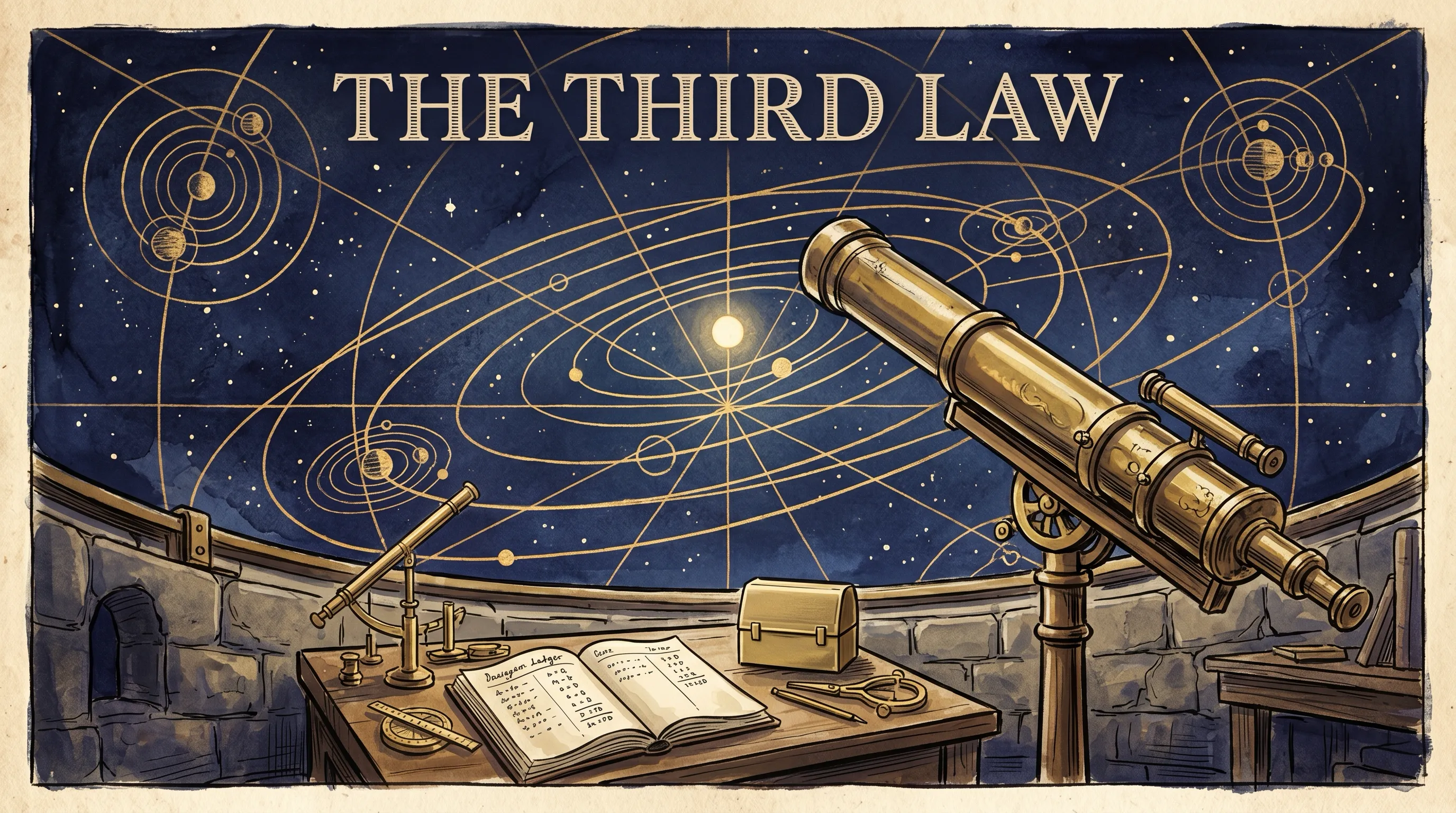
Kepler
Kepler is an open AI model for space math. That field is called orbital mechanics, the math of how things move in space, like a satellite circling Earth. Ask Kepler one of those questions and it shows a short chain of work, then ends with one clear number you can check.
It answers word problems about orbits, speeds, and travel between planets. It is built on Qwen3 8B, a strong small model, and taught with 600 worked space problems. A checking program graded every one of those problems, so the model learned from answers that were known to be right.
The teaching also fixed a bad habit. The base model would think forever and run out of room before giving an answer. Kepler answers every time, never gets cut off, and uses about a third of the words big cloud models spend on the same question.
We score it on a held-out test of 44 space problems it never saw in training. A program checks each answer to within 2 percent. The best build gets 88.6 percent right, and the full ladder is in the table above.
We also ran the same test against small frontier cloud models, with the same rules for everyone. Kepler got 84.1 percent on that run. Claude Haiku 4.5 got 97.7 and Gemini Flash-Lite got 95.5. That is the honest read: the cloud models are still better at the hardest multi-step problems. But Kepler runs on your own desk, free, private, and offline, and it answers in 166 words of work on average where the cloud models spend close to 500.
Two kinds of problems trip it up: two-burn transfers, the maneuvers that move a craft between two orbits, and working backward from an orbit time to a height. Treat its answers there as a first draft and check the number. We say this plainly because the test set that found these gaps is public too.
Download the Q8_0 build, an 8.2 GB file, and run it with llama.cpp on a Spark-class desktop, a small AI machine with 128 GB of memory. LM Studio and Ollama load the same file with no extra setup. If memory is tight, the smaller builds still work, they just miss more of the hardest problems.
huggingface-cli download Orionfold/Kepler-GGUF model-Q8_0.gguf --local-dir ./models/keplerllama-cli -hf Orionfold/Kepler-GGUF:Q8_0# A small server on your own machine. Anything that talks to
# OpenAI-style APIs can now talk to Kepler instead.
llama-server -m ./models/kepler/model-Q8_0.gguf \
-c 4096 -ngl 99 --host 0.0.0.0 --port 8080
from llama_cpp import Llama

llm = Llama(
    model_path="./models/kepler/model-Q8_0.gguf",
    n_ctx=4096, n_gpu_layers=99, chat_format="chatml",
)
out = llm.create_chat_completion(messages=[{
    "role": "user",
    "content": "A satellite circles Earth 550 km up. What is its "
               "orbital period in minutes? Give your final answer "
               "as \\boxed{value unit}.",
}])
print(out["choices"][0]["message"]["content"])
| Build | Size | Right answers (44-question test) |
|---|---|---|
| Q4_K_M | 4.7 GB | 75.0% |
| Q5_K_M | 5.5 GB | 75.0% |
| Q6_K | 6.3 GB | 84.1% |
| Q8_0 | 8.2 GB | 88.6% |
Live counts from HuggingFace, refreshed when the site builds. Built and maintained in the open by Orionfold.
Back this work with a monthly tier. Your support moves your requests up the list, and Gold or Platinum earns a badge on the roadmap item you back.
Back the work
$10 / month
Get a say
$25 / month
Move it up the list
$50 / month
Shape the roadmap
$100 / month
Need something specific? Send an enquiry from the roadmap.
We proved it. Rerun it yourself, do not take our word for it.
By subscribing you agree to receive the AI For Everyone digest, one email a week, no more. You can unsubscribe any time. AI For Everyone is now called AI Native Newsletter. See our privacy policy.
Prove which AI you can trust
Orionfold Proof runs on your own machine, tries the models you are weighing, and hands back a signed receipt you can rerun. Which one won, at what cost, with what failures.

Real notes from doing AI research on one desktop. The NVIDIA DGX Spark is a small machine with huge power (petascale means it runs about a quadrillion math steps a second), so you can push local AI further with no cloud needed. Every lesson is backed by code that runs.
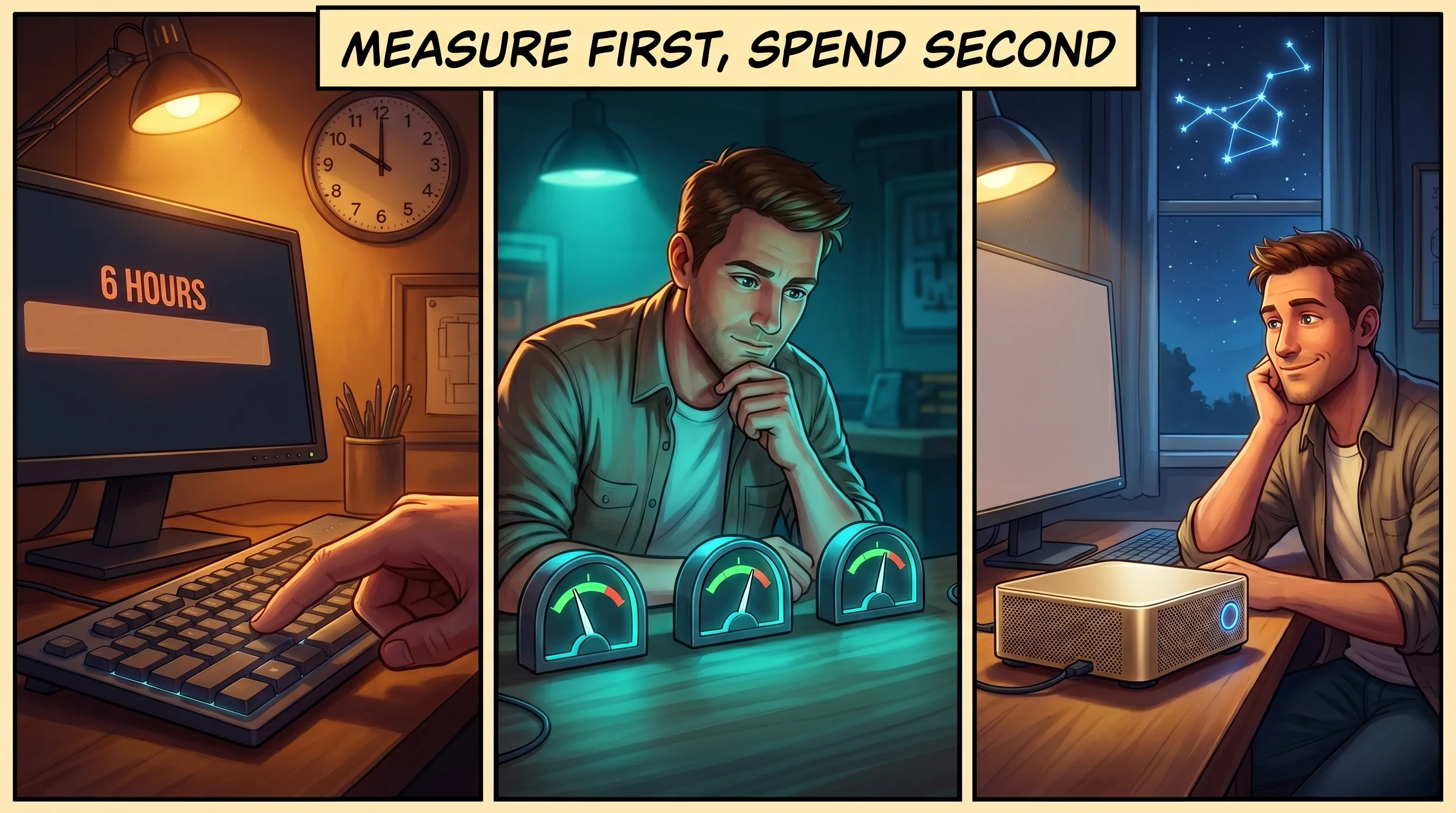
I built Kepler, a space-math model, on one desktop. Three cheap checks told me the big training run would change nothing. I ran it anyway, and proving them right was the win.